Global

Arevo, a eco-friendly plant food company, , just got €7.3 million

Arevo, a eco-friendly plant food company, just got €7.3 million

Arevo, a Swedish company that makes eco-friendly plant food, just got €7.3 million from its friends who gave money before: Industrifonden, Fort Knox Förvaring AB, Navigare Ventures, and Stora Enso. This big pile of cash will help Arevo build a giant factory to make much more of its special natural plant food. The money will also let them improve how they make it and start selling it to farmers in other countries around the world.

About Funding

Arevo is a company from Sweden that makes special plant food using natural ingredients instead of harsh chemicals. They just got a big pile of money—€7.3 million—to build a huge factory so they can make lots more of this plant food and share it with farmers in other countries. The same kind friends who helped them before gave money again because they believe in Arevo’s idea.

About their Products

This special plant food is made from something called arginine phosphate. It helps plants grow strong, keeps extra bits from washing into rivers, and makes much less pollution than the old kinds of plant food that hurt the air. In fact, regular plant food causes almost twice as much air pollution as all the airplanes in the world!

Company welcomed a new helper

Arevo also welcomed a new helper named Maria to their team. She used to lead Sweden’s Green Party and knows tons about keeping the Earth clean and following green rules. With her help and the new money, Arevo is ready to grow super big and help farmers everywhere grow food in a way that’s gentle on our planet.

This funding will help them improve production and sell to farmers in other countries. The special plant food helps plants grow strong, stops leaks into rivers, and cuts pollution, making farming better for the planet.
FAO’s GIAHS Programme: Protecting Traditional Farming for a Sustainable Future

What You Should Know

  • FAO honoured 28 new Globally Important Agricultural Heritage Systems (GIAHS) across 14 countries, bringing the total to 102 sites worldwide.
  • The event, held in Rome during FAO’s 80th Anniversary, celebrated communities preserving traditional knowledge, biodiversity, and climate resilience.
  • FAO Director-General QU Dongyu emphasized GIAHS’ role in achieving the Four Betters – Better Production, Nutrition, Environment, and Life.
  • Ministers and representatives from countries including Andorra, Tajikistan, Italy, Japan, and Indonesia joined the ceremony along with UN Tourism.
  • The programme featured a policy dialogue and a “Voices from GIAHS” talk show sharing success stories from six countries.
  • Launched in 2002, GIAHS now spans 29 countries, promoting agrobiodiversity, cultural heritage, and sustainable rural development.

What is Update

The Food and Agriculture Organization (FAO) celebrated 28 new special farming areas from 14 countries. These places are called Globally Important Agricultural Heritage Systems (GIAHS). They show how farmers, fishers, and local people use old and smart ways to take care of the land, grow food, and protect nature.

The event was held in Rome during FAO’s 80th birthday. FAO’s leader, QU Dongyu, thanked all the people who keep these traditions alive and said their work helps the world have better food, a cleaner environment, and a happier life.

Leaders from countries like Andorra, Tajikistan, Italy, Japan, and Indonesia joined the event. There were talks about how to support these heritage systems and stories from farmers in different countries. The GIAHS program started in 2002 and now includes 102 sites in 29 countries, helping protect nature and culture for a better and greener future.

Principle Outcomes

The GIAHS program helps protect old and wise farming methods that care for the earth and use resources wisely. It supports farmers and local communities by keeping their traditions alive while improving their income through eco-friendly farming and tourism. It also helps protect plants, animals, and soils, keeping the environment healthy. By learning from these traditional systems, people can find better ways to grow food and face challenges like climate change.

The FAO’s GIAHS program is very important for the future of farming and nature. It connects old knowledge with new ideas to make food systems stronger and more sustainable. By honoring these special farming areas, the world learns to respect nature, value culture, and work together for a better, greener, and safer planet.

Bonsai Robotics Boosts Team to Revolutionize Farming

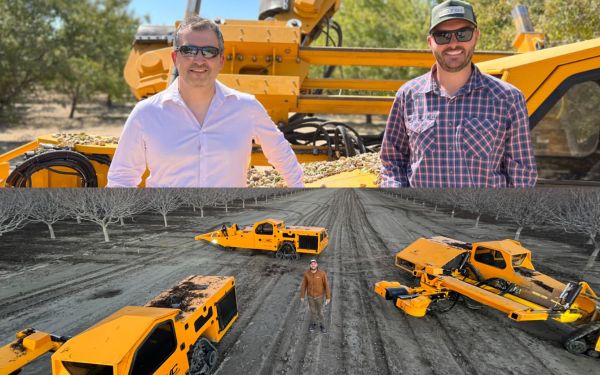
Bonsai Robotics, a company creating smart machines for farmers, is making big moves! They’ve added new leaders to their team and bought another company called farm-ng to make farming easier with high-tech tools.

What’s Happening?

Bonsai Robotics welcomed a group of experts to lead their mission. These leaders know a lot about farming, robots, and computers. In July, Bonsai also bought farm-ng, a company that builds electric farm machines. This helps Bonsai offer more solutions to farmers.

Why It Matters

Bonsai is working on machines that can think for themselves using cameras and computers. These machines:

  • Work in tough spots, like dusty fields or places with no GPS.
  • Fit on old tractors or new electric machines, like the Bonsai Amiga.
  • Team up to get jobs done faster.
  • Share information to help farmers save money and grow better crops.

Who’s on the Team?

The new leaders bring tons of experience:

  • Tyler Niday, CEO: Built machines at John Deere and Blue River.
  • Ugur Oezdemir, CTO: Expert in making machines “see” with cameras.
  • John Teeple, COO: Ran tech projects at John Deere.
  • Matt Pigeon, CFO: Manages money for big companies.
  • Gary Bradski, Chief Science Officer: Created OpenCV, a tool that helps computers understand pictures.
  • Brendan Dowdle, Chief Business Officer: Used to lead farm-ng and now helps sell Bonsai’s machines.
  • Arlen Frew, CRO: Knows how to get new tech to farmers.

Looking Ahead

Bonsai is already testing its machines on crops like fruits and veggies. These machines help farmers who don’t have enough workers and make farming cheaper and faster. With their new team and farm-ng’s tech, Bonsai is ready to change farming for the better!

Autonomous Mushroom Harvesting Company 4AG Robotics Raises $40M CAD

Great news for Mushroom industry, worldwide; because an autonomous mushroom harvesting company, 4AG Robotics raises $40M CAD.

About 4AG Robotics

4AG Robotics a Canadian Company which is working with robotics for mushroom industry. this company help mushroom growers for harvesting mushrooms with their autonomous robots. their robots currently operate in Canada, Ireland, and Australia, with launches planned in the U.S. and Netherlands.

About Funding

This investment $40M CAD is series B funding round. this financing to accelerate production and global expansion. The round was led by Astanor and Cibus Capital, with participation from Voyager Capital and continued support from InBC, Emmertech, BDC Industrial Innovation Fund, the Jim Richardson Family Office, Stray Dog Capital, and Seraph Group. The new funding brings the company’s total capital raised to $57.5 million in two years.

Target is $60 billion Industry

According to 4AG, The global mushroom market is set to grow exponentially, reaching a projected value of $60 billion by 2030. However, as demand surges, the industry faces a stark reality: a growing gap in labor availability.

Future Plans of 4AG

Plan is clear of 4AG Robotics. global expansion & innovation in their technology. what you think about this 4AG Robotics and their technology and this investment also; comment below!

Agri-Tech: Chinese Agriculture Terrorism, Cancer Train’s Myth, Mung Farmers Facing Problems

Key Highlights

  • India’s Agri Future Gets a Boost: ICRISAT & IFFCO Join Hands for World-Class Seed Research Hub in Gujarat
  • Mosaic Unleashes Neptunion in China: Next-Gen Biostimulant to Fight Drought, Heat & Salinity
  • MP Farmers Hit by MSP Delay: Forced to Sell Moong Below ₹6,500 Despite Govt-Declared Rates
  • Myth Busted: Punjab’s ‘Cancer Train’ Narrative Falls Apart Under Real Data
  • India & Netherlands Unite for $30 Trillion Bioeconomy Revolution: White Paper Released
  • FAO & USA Deepen Agri Ties: Big Data, Smallholders & Global Standards Take Center Stage
  • Bayer Unveils Super-Resistant Tomatoes to Defeat Evolving ToBRFV Threat
  • FMC & Corteva Join Forces to Fight Crop Diseases with Next-Gen Fungicide Fluindapyr
  • John Deere Unveils F8 & F9 Series Forage Harvesters with Smart Tech and Power Boost
  • New Holland 2026 Combines & Headers: Enhanced Precision, Power & Productivity
  • New Holland Partners with Inchcape to Boost Mechanization in Kenyan Agriculture
  • New ICRISAT Center Drives Agricultural Innovation and Collaboration for Global South
  • Scaling Climate-Resilient Rice Innovations to Protect Coastal Bangladesh Farmers
  • ICARDA Powers Next-Gen Cloud Tools to Revolutionize Crop Breeding Analytics
  • FiBL Transforms Organic Agriculture Knowledge Landscape Across Africa with Digital Innovation
  • Solar Farming Revolution: Shivraj Chouhan Urges Integrated Models to Boost Marginal Farmers’ Income
  • India Weather Alert: Heavy Rain, Thunderstorms & Heatwaves to Hit Multiple States This Week
  • Agroterrorism Alarm: Chinese Scientist Caught Smuggling Deadly Crop Fungus into U.S.
  • Fake Seeds & Fertilizers Crackdown: Minister Orders License Cancellation & FIRs
  • Free Insurance for 42 Lakh Livestock: Rajasthan Launches Massive Animal Cover Drive
  • India’s Agri Economy Set to Hit $1.4 Trillion by 2035 – McKinsey Forecasts Massive Growth
  • Amul Goes Global: India’s Iconic Milk Brand Now Available in Spain & Europe
  • Fake Fertilizer Busted: 600 Bags Seized in Maharashtra, Illegally Sourced from Rajasthan
  • Wheat Procurement Closing Soon: Latest Mandi Prices & Bonuses in UP, Rajasthan & Bihar
  • Advanta Seeds Goes Big in Europe with Strategic Corn Acquisition from Italy’s K-Adriatica
  • Fresh Del Monte Taps Dr. Nizar Haddad to Lead Innovation & Sustainable Growth via De l’Ora Bio
  • 61% Aussie Grain Growers Eye Autonomous Tech—But Cost & Connectivity Hold Back Progress
  • Kubota & Agtonomy Join Forces to Revolutionize Specialty Crop Farming with Smart Machines

Watch and Listen Latest Agri-Tech News and Updates

Watch Video

Listen Podcast

Follow on WhatsApp & Subscribe Our Newsletter

$20M+ Funding Boost: Vestaron Gears Up for Bioinsecticide Breakthroughs

Vestaron has successfully closed an oversubscribed funding round exceeding $20 million. Vestaron is leader in peptide-based bioinsecticide development. This new capital will drive the company’s expansion in North America and Europe while accelerating the commercialization of its innovative crop protection solutions.

Key Highlights

  • Vestaron secures over $20 million in funding to accelerate commercialization and expansion.
  • The company is focusing on North America and Europe, leveraging new regulatory approvals.
  • BASIN™, Vestaron’s second peptide-based active ingredient, has been approved in the U.S. and Mexico.
  • Strategic partnerships, including a production agreement with ADM, enhance scalability and cost efficiency.
  • Investors show strong confidence in Vestaron’s leadership and commitment to sustainable agriculture.

Commercialization and Global Growth

BASIN™ Set for Full Launch in 2025

Vestaron anticipates that by the end of 2025, it will receive full regulatory approvals and commercially launch BASIN™, This is second active ingredient. This addition will complement the company’s existing SPEAR® product line, providing farmers with more tools to combat pest resistance sustainably.

The company is also exploring further market entry opportunities beyond North America and Europe, reinforcing its commitment to addressing global agricultural challenges.

Greenlight Biosciences Secures $25M in Series C Funding to Drive Sustainable Agriculture

Greenlight Biosciences recently closed its Series C Funding round $25 Million from just Climate and other investors. Company has taken another major Make rapid progress in transforming the agricultural industry with sustainable solutions. This investment will help in accelerate the commercialization of RNA-based agricultural BioSolutions.

Innovation of Greenlight Biosciences in Crop Protection

One of GreenLight Bio’s most effective innovation is the development and commercialization of Calantha™, the first-ever RNA-based crop protection spray. It offers an innovative alternative to conventional chemical pesticides to potato growers- delivering comparable efficacy while ensuring enhanced environmental safety. This is a Important shift in sustainable farming practices. Calantha™ registered in both the United States and Ukraine

Expanding the GreenLight Product Portfolio

With the newly secured funding, It company is focusing on scaling up its product portfolio. In that two key developments include:

  • Norroa™ – This is a revolutionary RNA solution targeting varroa mites in honeybee colonies. With U.S. registration pending, Norroa™ holds immense promise in tackling the alarming decline of pollinator populations.
  • Fortivance™ – It is a next-generation adjuvant designed to boost agricultural treatment performance while minimizing environmental impact.

According to the Honey Bee Health Coalition, U.S. beekeepers have reported honeybee colony losses averaging 62% between June 2024 and February 2025—underscoring the urgent need for solutions like Norroa™.

A Vision for a Greener Future

With the latest funding round, Greenlight Biosciences is poised to lead the way in sustainable agriculture, delivering innovative solutions that protect crops, pollinators, and the planet. As the company continues to pioneer RNA-based advancements, the future of farming looks greener than ever.