
GrowinAgri

Indian AgriDose

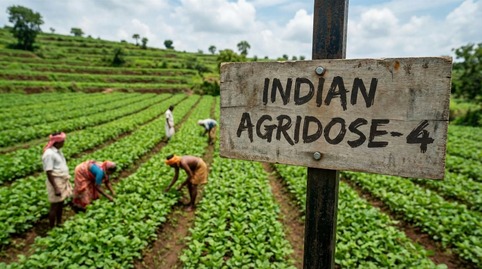
From Budget Billions to Smart Farms — India’s Agriculture is Being Rewritten | Indian AgriDose- 04

Indian agriculture is entering a decisive phase. The Union Budget 2026–27 makes one thing clear — farming is no longer driven by one ministry, one scheme, or one crop. It is now powered by multi-ministry coordination, technology adoption, climate resilience, women-led growth, and global trade strategy.

In this edition of Indian AgriDose, we decode how policies, innovations, and investments across India are quietly reshaping farm economics — from irrigation and mechanisation to ethical silk, drought mitigation, exports, and post-harvest infrastructure.

This is not just a news round-up.
This is a signal of where Indian agriculture is heading next.

Budget 2026–27: How Multiple Ministries Shape Indian Agriculture

The Union Budget 2026–27 highlights that agriculture in India is supported by several ministries, not just the Ministry of Agriculture and Farmers’ Welfare. While this ministry received ₹1.40 lakh crore, major support also comes from the Department of Fertilisers with ₹1.70 lakh crore and the Ministry of Rural Development with ₹1.97 lakh crore.

Allied sectors such as livestock, dairy and fisheries saw strong growth, with their ministry’s budget rising by over 18 percent. Research funding under agricultural education slightly declined, showing uneven growth within the sector. Local governance through the Ministry of Panchayati Raj also plays a key role in implementing schemes at the village level.

Overall, the budget shows that farm incomes, rural livelihoods and input availability depend on coordinated efforts across multiple ministries.

Pusa Agricultural Science Fair 2026 to Showcase Smart Farming in Delhi

The Pusa Krishi Vigyan Mela 2026 will be held from 25 to 27 February at the Pusa Mela Ground, New Delhi, organized by the Indian Agricultural Research Institute (IARI).

Based on the theme “Developed Agriculture – Self-Reliant India,” the fair will highlight digital farming, climate-resilient agriculture, Pusa seeds, startups, and agri-entrepreneurship.

This year, the event is dedicated to the International Women Farmers Year, with special focus on women and youth entrepreneurship. Farmers will get live demonstrations on smart irrigation, precision input use, and climate-smart crop varieties.

The mela will also feature Pusa’s high-quality seeds, live crop displays, and guidance on government schemes and FPO marketing.

With experts, technologies, and innovations under one roof, the fair aims to transform farming into a profitable and modern business.

India’s USD 2 Trillion Export Target Likely by 2032: Piyush Goyal

India is now expected to achieve its USD 2 trillion goods and services export target around 2032, instead of the earlier goal of 2030, due to global uncertainties and setbacks caused by the COVID-19 pandemic, Commerce and Industry Minister Piyush Goyal said.

He noted that the pandemic led to a loss of over two-and-a-half years in export growth, compounded by turbulence and volatility in the global trading order, which is now gradually stabilizing. India’s exports stood at USD 825 billion in 2024-25 and are expected to cross USD 850 billion in 2025-26.

The minister highlighted that ongoing free trade agreements (FTAs) will provide domestic exporters with new opportunities, as FTAs not only facilitate trade in goods and services but also ensure stability, predictability, and clarity in international engagement, attracting global investors.

Despite the revised timeline, Goyal remains confident that India will reach the two trillion dollar export milestone.

IIT Bombay Develops Compassionate ‘Jeevodaya Silk’ with Coal India Support

IIT Bombay’s Centre for Technology Alternatives for Rural Areas has developed a silk production method that spares silkworms’ lives, under Coal India’s CSR initiative.

The three-year pilot project, ‘Jeevodaya’, trains silkworms feeding on mulberry leaves to spin silk threads on flat surfaces instead of forming cocoons, allowing them to mature into moths naturally.

Unlike traditional methods that kill millions of worms, this ethical silk technique aligns with the Indian ethos, “Ma kaschit dukha bhag bhavet” (may no one suffer).

Coal India supported the project from research to implementation, and the innovation is set for wider adoption, promising sustainable income for sericulture farmers and strengthening rural livelihoods.

Maharashtra Government Partners with Godrej Agrovet to Empower Women Farmers

The Maharashtra government has taken a major step to support women farmers by signing an agreement with Godrej Agrovet Limited to provide modern and improved farming training to more than 5,000 women farmers. Guided by Chief Minister Devendra Fadnavis, the initiative recognizes the vital role women play in agriculture and aims to make them more self-reliant and economically empowered.

In the first phase, women farmers from cotton-growing districts including Nagpur, Amravati, Yavatmal, Washim, Parbhani, Jalgaon, Beed, Akola, and Nanded will benefit, along with 100 self-help groups. The program will cover around 50,000 acres and focus on Good Agricultural Practices and Integrated Pest Management to reduce costs and improve productivity.

Implemented with support from the Maharashtra State Rural Livelihoods Mission (MSRLM–Umed), the initiative will connect women farmers through SHGs and the Krushi Sakhi network, while Godrej Agrovet will provide training, demonstration plots, farmer field schools, and safety kits.

Launched ahead of the UN-declared International Year of Women Farmers 2026, the partnership marks a strong commitment to strengthening women-led agriculture and rural development in the state.

₹620 Cr Irrigation Projects Approved for Maihar and Katni

The Madhya Pradesh Cabinet, chaired by Chief Minister Dr. Mohan Yadav, has approved two irrigation projects worth over ₹620 crore for Maihar and Katni districts to strengthen agricultural infrastructure.

Of this, ₹53.73 crore has been sanctioned for the Dhanwahi Micro Pressure Irrigation Project, which will provide irrigation facilities across 3,500 hectares and benefit 2,810 farmers in nine villages of the two districts.

The Cabinet also decided to allow free registration of residential plots allotted to displaced families of the Sardar Sarovar Project, with registration fees and stamp duty to be reimbursed by the Narmada Valley Development Authority.

This decision will benefit over 25,600 families and will place an estimated financial burden of ₹600 crore on the state government.

Odisha Launches Agriculture Drought Mitigation Programme to Build Climate Resilience

ICRISAT, in partnership with the Government of Odisha, ICAR-CRIDA and IRRI, has launched the Odisha Agriculture Drought Mitigation Programme (OADMP) with a state-level inception workshop held in Bhubaneswar on 30 January 2026.

Supported by the National Disaster Mitigation Fund and Odisha State Disaster Management Authority, the programme aims to strengthen drought resilience and climate preparedness in rainfed regions of the state. Implemented in selected blocks of Nuapada, Nabarangpur and Mayurbhanj districts, OADMP is expected to directly benefit around 24,000 farming households, with wider impacts through convergence with existing schemes.

The initiative follows a science-led, landscape-based approach integrating soil and water management, climate-resilient crops, diversified livelihoods, nutrition and value chains, with Odisha Deputy Chief Minister Kanak Vardhan Singh Deo highlighting the need for proactive drought preparedness to protect livelihoods and enhance farmers’ incomes.

Mahindra Sees Strong Tractor Sales Growth in January 2026

Mahindra & Mahindra’s Farm Equipment Business reported a sharp rise in tractor sales for January 2026, driven by strong domestic demand and a surge in exports. Domestic sales reached 38,484 units, marking a 46 percent increase over January 2025, while total sales (including exports) rose 47 percent to 40,643 units.

Exports stood at 2,159 tractors, registering a robust 72 percent year-on-year growth. The company attributed this performance to high reservoir levels supporting record Rabi sowing, along with positive expectations from government support and higher rural development allocations.

On a cumulative basis, domestic sales grew 23 percent and exports 24 percent compared to last year. Overall, the results highlight growing confidence in farm mechanization and a strengthening agriculture sector.

Golden Opportunity for Farmers: Up to 50% Subsidy on Pack Houses and Cold Storage in Madhya Pradesh

The Directorate of Horticulture and Farm Forestry, Madhya Pradesh, has invited applications for the financial year 2025–26 under the Mission for Integrated Development of Horticulture (MIDH) to support post-harvest management (PHM) infrastructure.

Aimed at reducing post-harvest losses and increasing farmers’ income, the scheme offers subsidies of up to 50% for setting up facilities such as pack houses, cold storages, and pre-cooling units.

The initiative is open to horticulture farmers and agri-entrepreneurs, providing financial assistance to strengthen post-harvest infrastructure and improve the storage, handling, and market value of horticultural produce.

UP Government Strengthens Khet Talab Yojana to Boost Irrigation and Farm Income

The Uttar Pradesh government, under Chief Minister Yogi Adityanath, has further strengthened the Khet Talab Yojana to support farmers with better irrigation facilities and promote rainwater conservation.

For 2025–26, online applications have begun on a first-come, first-served basis, enabling farmers not only to improve water availability but also to earn additional income through fisheries, singhada, makhana, and pearl farming.

Under the scheme, the cost of one farm pond is fixed at ₹1.05 lakh, of which the government will provide a subsidy of ₹52,500, while the remaining amount will be borne by the farmer.

Applications can be submitted on the agridarshan.up.gov.in portal with a token amount of ₹1,000, and the subsidy will be transferred directly to farmers’ bank accounts in two installments through DBT, subject to the installation of a micro-irrigation system such as drip or sprinkler.

US–India Trade Deal to Boost American Agricultural Exports

A new trade agreement between the United States and India is expected to significantly expand exports of US agricultural products to India’s rapidly growing market, according to US Secretary Brooke Rollins.

Calling it an “America First” win, Rollins said the deal will help raise farmgate prices and bring additional income to rural America while addressing the USD 1.3 billion agricultural trade deficit the US recorded with India in 2024.

With India’s population and food demand continuing to rise, the agreement is seen as a key step in improving market access for American farmers, boosting exports, and strengthening the long-term strategic trade relationship between the two countries.

Editor’s Note

Agriculture today is no longer about survival — it is about scale, sustainability, and smart systems.

Whether it’s ₹620 crore irrigation projects in Madhya Pradesh, women farmers gaining modern training in Maharashtra, smart farming at Pusa, or record tractor sales by Mahindra — the common thread is confidence returning to the countryside.

At the same time, global trade shifts, export ambitions, climate risks, and ethical innovations like Jeevodaya Silk remind us that farming is now connected to larger economic and environmental systems.

Indian AgriDose exists to track these shifts early — so farmers, agribusinesses, founders, investors, and policymakers can stay ahead.

Thank you for reading, sharing, and growing with us.
The soil is changing — and so is the future.

Newsletter Form (#8)

Subscribe to our newsletter

Welcome to our Newsletter Subscription Center. Sign up in the newsletter form below to receive the latest news and updates from our company.


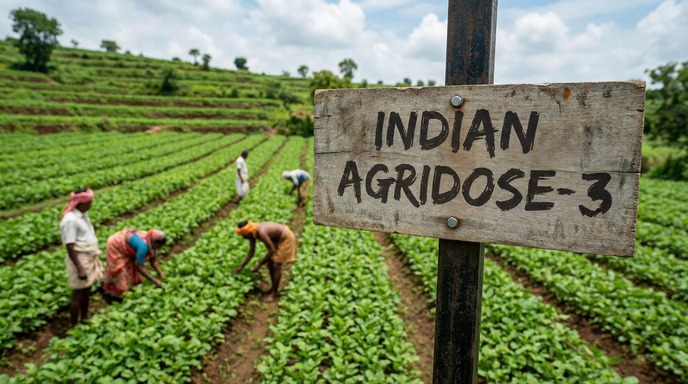
Resilience in Action: India’s Climate-Smart Agriculture Moment | Indian AgriDose- 3

India’s agriculture sector is standing at a powerful crossroads—where climate stress, innovation, policy reform and global market access are converging faster than ever before.

This edition of Indian AgriDose captures that momentum.

From the world’s first three-way pearl millet hybrid designed for India’s harsh drylands, to smart fishing infrastructure in the Andaman Islands, new agri-biotech delivery systems, digital farmer onboarding, export wins, and policy advocacy—this week’s developments show one clear truth:

India is not just adapting to climate change—it is engineering resilience.

Whether you are a farmer, agribusiness leader, policymaker, investor or startup founder, these stories highlight where India’s agri economy is heading—and where the next opportunities lie.

World’s First Three-Way Pearl Millet Hybrid RHB 273 Launched for India’s Drought-Prone Regions

ICRISAT, in partnership with ICAR and RARI, has announced the release of the world’s first three-way pearl millet hybrid, RHB 273, designed specifically for dryland regions of Rajasthan, Gujarat, and Haryana. Notified for A1 zones with rainfall below 400 mm, the hybrid integrates high yield, drought tolerance, disease resistance, and superior fodder quality through a three-parent breeding approach.

After extensive multi-location trials across 30 sites, RHB 273 recorded an average yield of around 2,230 kg/ha—up to 27% higher than regional varieties and nearly 28% more than HHB 67 Improved. This dual-purpose hybrid is expected to strengthen food, nutrition, and fodder security in some of India’s most climate-stressed farming regions.

CropLife India Warns on Un-Authorised Pesticide Sales via E-Commerce

CropLife India has raised concerns over the rising sale of Un-Authorised and spurious pesticides through e-commerce platforms, calling for stronger regulation and enforcement. At its national conference in New Delhi, the association urged a joint government–industry framework to ensure platform accountability, traceability and farmer safety.

Officials highlighted that basic compliance checks by online platforms are inadequate for hazardous products like pesticides. CropLife India noted regulatory gaps under existing laws and the Draft Pesticides Management Bill, 2025, especially for inventory-based e-commerce models. The association emphasized that regulated digital enablement is essential to protect farmers, food security and consumer trust.

Mahindra Tractors Launches Tricolour-Inspired Limited-Edition Yuvo Tech+ 585 DI

Mahindra Tractors has unveiled a Tricolour-inspired Limited-Edition Yuvo Tech+ 585 DI 4WD to mark Republic Day 2026, celebrating national pride and Indian agriculture. Offered in restricted numbers, the tractor comes in Metallic Orange, Everest White and Metallic Green shades inspired by the Indian flag.

Based on Mahindra’s popular Yuvo Tech+ platform, the limited edition combines visual appeal with strong performance, featuring a 45.4 HP engine, 2000 kg lift capacity and advanced transmission options. The Metallic Green variant includes exclusive accessories, and the tractors will be available at select dealerships from January 26, 2026.

ICRISAT Signs MoU with Odisha Government to Support Drought Mitigation

ICRISAT has signed a Memorandum of Understanding with the Government of Odisha under the National Drought Mitigation Programme, reinforcing its role in promoting climate-resilient agriculture in the state. The MoU was formalised during Krushi Odisha 2026, a flagship event organised by the Department of Agriculture & Farmers’ Empowerment.

The collaboration aims to strengthen the Odisha Agriculture Drought Mitigation Programme through integrated, systems-based approaches focused on resilience, nutrition and farmer livelihoods. The partnership brings together state agencies, national and international research institutions to support sustainable agricultural transformation and long-term drought preparedness in Odisha.

ICAR Develops Biocapsule Technology for Efficient Delivery of Beneficial Microbes

ICAR–Indian Institute of Spices Research, Kozhikode has developed and commercialised a novel biocapsule technology for storing and delivering agriculturally important microbes, including PGPR, Trichoderma and nutrient solubilizers. The gelatin-based capsules keep microbes in an inactive state and can be activated by dissolving in water before seed, seedling or soil application.

The eco-friendly technology ensures precise delivery, high microbial population, long shelf life and easy storage at normal temperatures. Licensed to startups such as CodaguAgritech and SRT Agro Science, over 30,000 capsules have already been sold across multiple Indian states, supporting sustainable and cost-effective agri-biological use.

ACFI Urges Government to Cut Pesticide Import Duty and GST Ahead of Union Budget 2026

The Agro Chem Federation of India (ACFI) has requested the government to reduce the import duty on pesticides from 10% to 5% in the Union Budget 2026 to lower cultivation costs and improve farmer access to modern crop protection technologies. The federation also called for rationalisation of GST on pesticides, which is currently 18%, compared to 5% on fertilisers.

ACFI said the tax disparity increases the cost burden on small and marginal farmers, who make up over 85% of India’s farming community. With changing climate and cropping patterns, access to newer molecules has become critical for crop protection. The industry urged the government to treat pesticides as essential inputs and align their tax rates with fertilisers to support productivity and farm incomes.

Madhya Pradesh Approves 100-Acre Flower Cluster in Ujjain Ahead of Simhastha 2028

The Madhya Pradesh government has approved a 100-acre commercial flower cultivation cluster in Ujjain to ensure steady floral supply for Simhastha Kumbh Mela 2028 and the city’s major temples. Implemented by the state Horticulture Department, the project aims to modernise high-value agriculture and create sustainable income for local farmers. The cluster will promote scientific cultivation of roses, marigolds, gerberas, tuberose, chrysanthemums, and gladiolus. Localised production is expected to cut transport costs, reduce post-harvest losses, and strengthen market linkages. The initiative aligns religious tourism demand with long-term agribusiness growth in the region.

Centre Sanctions ₹199.24 Cr Smart Fishing Harbour at Mayabunder in Andaman & Nicobar

The Ministry of Fisheries has approved ₹199.24 crore to develop a Smart and Integrated Fishing Harbour at Mayabunder in the Andaman & Nicobar Islands under the Pradhan Mantri Matsya Sampada Yojana. Built in line with the Blue Port Initiative, the harbour will feature IoT-enabled systems, safe berthing for 430 vessels, digital traceability, energy-efficient operations, and sustainable fish-handling infrastructure. It will handle nearly 9,900 tonnes of fish annually while strengthening livelihoods and curbing illegal fishing. The project supports the Islands’ growing tuna cluster and value chain development. It is a key step toward India’s goal of ₹1 lakh crore seafood exports by 2030–31.

Madhya Pradesh Opens Straw Reaper Subsidy Applications on e-Agriculture Portal Until February 2

The Madhya Pradesh government has opened applications for purchasing straw reaper machines under a subsidy scheme to promote eco-friendly crop residue management. Farmers can apply online through the e-Agriculture Farm Machinery Subsidy Portal from January 22 to February 2, 2026. Applicants must submit a ₹10,000 demand draft from their own bank account in favour of the concerned district’s Assistant Agricultural Engineer, failing which the application will be invalid. Required documents include land records (Khasra B-1), Aadhaar card, bank passbook, tractor RC, and caste certificate for SC/ST farmers.

Centre Approves Tur Procurement in Maharashtra with ₹2,696 Crore MSP Support

The Government of India has approved the procurement of 3.37 lakh metric tonnes of tur (pigeon pea) from Maharashtra under the Price Support Scheme, involving an MSP outlay of around ₹2,696 crore. The decision was taken at a high-level meeting chaired by Union Agriculture Minister Shivraj Singh Chouhan, with coordination between the Centre, Maharashtra government, NAFED, and NCCF. The procurement will be carried out directly from farmers to reduce intermediaries and ensure MSP benefits reach genuine producers. Officials have been directed to expand procurement centres, adopt transparent digital systems, and prioritise farmer convenience for smooth and efficient operations.

Bihar Government Offers 50% Subsidy to Start Nursery Businesses

Bihar’s government is providing a major opportunity for farmers and youth to start nursery businesses under the Agriculture & Forestry Scheme, offering up to 50% subsidy on setup costs. The scheme supports both new nurseries and production of forestry-related plants like Gumhar, Semal, Malawar Neem, and other quality saplings. For small nurseries on half a hectare, the total cost is ₹10 lakh, with a ₹5 lakh grant, while existing nurseries producing forestry plants can get ₹2.5 lakh subsidy on a ₹5 lakh unit cost. Applications are open to all eligible residents, with selection on a first-come, first-served basis, and SC/ST applicants must submit caste certificates. Interested candidates can apply online via horticulture.bihar.gov.in or the Bihar Agriculture App, and beneficiaries must submit geo-tagged selfies and site inspection certificates before and after project completion.

Bihar Launches Mission-Mode Farmer Registration Drive from 2–6 February, Rewards for Top-Performing Districts

Bihar government will conduct a mission-mode farmer registration drive under the AgriStack project from 2nd to 6th February to connect maximum farmers to the system. Farmers will not be charged any fees for registration, and top-performing districts will receive government incentives. So far, around 29.55 lakh farmers have been issued farmer IDs, and e-KYC has been completed for over 67 lakh farmers, while the state has approximately 75 lakh beneficiaries under the PM-Kisan scheme. Districts achieving 50% registration of PM-Kisan beneficiaries will receive ₹1.5 lakh, while those achieving 35% will get ₹50,000. The initiative aims to improve access to agricultural schemes in a transparent, timely, and efficient manner, with Bihar’s model earning national recognition as a best practice during a recent workshop by the Ministry of Agriculture and Farmer Welfare.

Odisha Exports Fresh Strawberries to London, Marks Entry into Global Markets

Odisha has achieved a major agri-export milestone with the first-ever shipment of 51 kg of fresh strawberries from Dhenkanal to London, enabling farmers to earn nearly 50% higher prices than local markets. The export was led by Saptasajya Agro Producer Company Limited, showcasing the role of FPOs in producing export-quality horticultural crops.

Supported by the Directorate of Horticulture under the PSFPO project, along with APEDA, WTC and OLM, the initiative highlights strong institutional collaboration. This landmark export positions Odisha as an emerging supplier of high-value horticultural produce in global markets and opens new income opportunities for farmers.

India’s Pulses Imports Expected to Fall 30% in FY26

India’s pulses imports are projected to decline by around 30% to 5 million tonnes in FY26, down from 7.3 million tonnes in the previous fiscal year. The reduction is attributed to higher carry-forward stocks, a weakening rupee, and the imposition of a 30% duty on yellow peas. Bimal Kothari, Chairman of the India Pulses & Grains Association (IPGA), noted that significant quantities imported last year are still in stock, contributing to lower import requirements this year. Commerce Ministry quick estimates also reflect a 33% decline in import value during April–December FY26, totaling $2.525 billion compared to $3.788 billion in the same period last year. The drop signals a tighter import demand amid domestic stock availability and policy measures.

Editor’s Note

Dear Readers,

As India moves deeper into 2026, agriculture is no longer just about production—it is about survival, sustainability, and scale.

This edition reflects a sector that is:

  • Innovating (biocapsules, drought-resilient hybrids, smart harbours),
  • Reforming (MSP procurement, digital farmer IDs, regulatory push on e-commerce pesticides),
  • Expanding (global strawberry exports, flower clusters, fisheries value chains), and
  • Advocating (tax reforms, fair digital markets, input access).

What stands out most is the shift from fragmented solutions to systems-based agriculture—where technology, policy, climate resilience, and farmer income are being addressed together.

At Indian AgriDose, our mission is to bring you not just news—but signals of change. Signals that help you understand where India’s agri economy is heading, and how you can be part of that transformation.

Seed Act 2026: QR Codes, ₹30 Lakh Fines & 3-Year Jail for Fake Seeds | Indian AgriDose- 2

India’s Agri-sector is moving faster than ever—new laws, record imports, rising exports, and climate-smart innovations are reshaping farming and agribusiness. Indian AgriDose – Edition 2, brings you the most important policy, market, and technology updates you need to stay ahead.

India’s New Seed Act 2026 Introduces Traceability, Strict Penalties, and Stronger Farmer Protection

Union Agriculture and Farmers’ Welfare Minister Shivraj Singh Chouhan has outlined the key features of the proposed Seed Act 2026, calling it a historic reform to protect farmers, ensure seed quality, and bring transparency to the seed system. The new law introduces a nationwide seed traceability system, with QR codes on every seed packet allowing farmers to access full details on seed origin, production, and supply chains.

It mandates registration of all seed companies, imposes strict penalties up to ₹30 lakh and imprisonment up to three years for selling fake or substandard seeds, and strengthens oversight of imported seeds through rigorous evaluation. Importantly, the Act places no restrictions on traditional seed saving and exchange, modernizes the outdated 1966 law using digital tools, and preserves states’ rights in agriculture, aiming to ensure that every farmer receives safe, reliable, and high-quality seeds.

VST Tillers Launches FENTM Tractor Series in Gujarat to Boost Modern Farming

VST Tillers Tractors Ltd introduces its FENTM Tractor Series in Gujarat’s Saurashtra region, offering compact, fuel-efficient, and versatile tractors designed for small to mid-sized farms. With 19–30 HP models featuring 2WD and 4WD options and advanced Load Sensing Mechanism (LSM) technology, the series enhances productivity, torque delivery, and adaptability across diverse crops and terrains.

India to Establish Center of Excellence for Broccoli to Boost Cultivation and Nutrition

The Government of India announces a Center of Excellence (CoE) for broccoli to strengthen cultivation practices, cold storage, processing infrastructure, and market linkages. Highlighted at the Broccoli Consumption Conference India 2026, the initiative aims to promote broccoli as a nutrient-dense superfood, improve farmer incomes through cluster-based development, and integrate cultivation with public health objectives. Collaboration with international partners and private stakeholders will support varietal improvements, technical training, and value-added products, creating a holistic broccoli ecosystem in India.

Maharashtra Farmers Get Relief as Centre Approves ₹2.66 Lakh Crore Crop Loan Restructuring

The Government of India approves restructuring of ₹2.66 lakh crore crop loans for 17.29 lakh farmers in Maharashtra affected by heavy and unseasonal rains. Under the scheme, farmers will benefit from temporary suspension of loan recovery, subsidized interest rates in the first year, and time to restart cultivation. The move follows Maharashtra’s declaration of a natural disaster and verification of eligible accounts by the State Level Bankers’ Committee (SLBC), offering both financial and mental relief to distressed farmers while supporting the state’s agricultural recovery.

India’s Fertilizer Imports Set to Touch Record $18 Billion in FY26

India is set to import a record $18 billion worth of fertilizers this fiscal year, a 76% rise from last year, driven by strong monsoon rains and higher crop sowing. In the first nine months, imports already touched $13.98 billion, with another $4 billion expected in the final quarter.

Above-normal rainfall and expanded winter crop acreage have boosted fertilizer use, pushing overall consumption up by 5%. Urea imports may rise 61% to 9 million tones, while DAP imports could jump 52% to 7 million tones, mainly sourced from Oman, Russia, China, Saudi Arabia, and Morocco.

Rabi Sowing Gains Momentum, Crop Coverage Up Over 20 Lakh Hectares

As of January 16, 2026, India’s Rabi crop coverage reached 652.33 lakh hectares, up 20.88 lakh hectares from last year. Wheat area increased by 6.13 lakh hectares, rice by 4.61 lakh hectares, and pulses—including gram—by 3.82 lakh hectares. Coarse cereals like maize and barley, and oilseeds such as rapeseed and mustard, also recorded significant gains. Supportive weather and agricultural programs have driven the expansion, reinforcing food security and farmer participation.

India’s Sugar Output Surges 22% to 15.9 Million Tones by Mid-January

India’s sugar production reached 15.9 million tones by January 15, 2026, up 22% from 13 million tones a year earlier, supported by higher cane supplies and better yields. Maharashtra led production with 6.45 million tones, followed by Uttar Pradesh at 4.6 million tones and Karnataka at 3.1 million tones. Around 518 mills were operational, up from 500 last year. While production growth is strong, rising cane prices and falling sugar rates are pressuring mill finances and delaying payments to farmers.

India Launches World’s First Three-Way Pearl Millet Hybrid RHB 273 to Boost Yields and Fodder Security in Drylands

India has unveiled RHB 273, the world’s first three-way pearl millet hybrid, developed by ICRISAT in collaboration with ICAR and state partners, to strengthen climate-resilient agriculture in extreme drylands. Officially recommended for A1 zones across Rajasthan, Gujarat, and Haryana, RHB 273 combines high grain yield, drought tolerance, disease resistance, and superior fodder quality, delivering a dual-purpose solution for farmers and livestock.

Multi-location trials demonstrated a 13–28% yield advantage over existing varieties, along with strong resistance to downy mildew, blast, and smut. The hybrid enhances food, nutrition, and fodder security, supports sustainable mixed crop–livestock systems, and exemplifies India’s science-led approach to agricultural innovation with global relevance for dryland regions.

Punjab Agricultural University Becomes First Indian State Agricultural University to Join BRICS Network University

Punjab Agricultural University (PAU), Ludhiana, has become the first state agricultural university from India to join the BRICS Network University, marking a historic milestone in its journey from national excellence to global leadership. This inclusion highlights PAU’s decades-long contributions to agricultural innovation, sustainability, and capacity building. Through the BRICS academic network, PAU will engage in collaborative research, faculty and student exchanges, and joint programs with leading universities across Brazil, Russia, China, and South Africa. The move strengthens PAU’s role in advancing climate-resilient agriculture, food security, and sustainable farming practices, reinforcing India’s presence in global agricultural research and education.

Karnataka Mango Output Expected to Rise 20% in 2026

Karnataka’s mango production is projected to increase by nearly 20% in 2026, thanks to favourable weather during the critical flowering period. After four years of erratic climate, orchards across districts such as Dharwad, Belagavi, Kolar, Ramanagara, and Chikkaballapur are reporting improved conditions. Key varieties include Alphonso, Badami, Mallika, Raspuri, Neelam, and Totapuri. Horticulture officials have advised growers to protect blossoms and avoid chemical sprays or irrigation during pollination to maximize fruit set. Forecasts indicate yields of around 65,000 tons in Dharwad and 50,000 tons in Belagavi, while other districts are also expected to see significant gains, boosting confidence among mango producers.

Centre Approves Purchase of 1.01 Lakh Tones of Chana at MSP, ₹595.37 Crore Procurement in Karnataka

The Indian government has approved the procurement of 1.013 lakh tones of chana (Bengal gram) at a minimum support price (MSP) of ₹5,875 for the Rabi 2026-27 season in Karnataka, with a total value of ₹595.37 crore. Agriculture Minister Shivraj Singh Chauhan urged the state to procure the full approved quantity to support farmers, criticizing past shortfalls in MSP procurement of tur and Totapuri mangoes. Meanwhile, Bengal gram sowing has increased 5% year-on-year to 95.87 lakh hectares, led by Rajasthan, Madhya Pradesh, and Karnataka, while Maharashtra saw a decline. The announcement aligns with broader efforts to stabilize farmer incomes and boost pulse production.

Brisil Technologies Raises ₹3 Cr Pre-Seed to Scale Sustainable Silica from Rice Husk Ash

Climate-tech startup Brisil Technologies has raised ₹3 crore in a pre-seed funding round led by Momentum Capital, with participation from Fondation Botnar. Founded in 2016 by Tanmay Pandya, Brisil uses a proprietary zero-waste chemical process to produce sustainable silica from rice husk ash (RHA)—an agricultural waste byproduct.

The funding will be used to expand production capacity, strengthen the team, and scale operations to meet a growing global demand pipeline of 6,000 metric tones per month. Currently operating at 400 tones per month, Brisil plans to scale to 3,000–5,000 tones per month, targeting customers across Tyres, footwear, paints, and allied industries in South East Asia and Europe.

Brisil’s process reduces carbon emissions, avoids mining river sand and quartz, and supports circular economy goals. Its green silica improves fuel efficiency in Tyres and enhances durability in footwear, positioning the company as a sustainable alternative to major players like Solvay, Evonik, Tata Chemicals, and Madhu Silica.

Zerocircle Raises ₹5 Cr Pre-Series A to Scale Seaweed-Based Packaging

Pune-based Zerocircle has raised ₹5 crore in a pre-Series A round co-led by 3one4 Capital and Rainmatter Capital. The funding will support R&D and scale-up of its seaweed-based, plastic-free packaging for food and consumer applications. Founded by Neha Jain, the company targets high-volume segments like QSR food packaging, coated paper, and beverage cups. Zerocircle has already replaced 1.6 million plastic containers across India and Europe and is expanding into new barrier coating technologies.

Bangladesh Food Ministry Approves Import of 2 Lakh Tones of Rice Amid Market Debate

The Bangladesh Food Ministry has issued fresh permits allowing private traders to import 2 lakh tones of parboiled rice, bringing total import approvals this fiscal year to 8 lakh tones. The move comes despite comfortable public food stocks, an above-average Aman harvest, and stable overall production. The government aims to stabilize rice prices, which have edged up in recent weeks, by ensuring supply ahead of potential seasonal fluctuations.

However, Agro-economists have criticized the decision as premature, arguing that large-scale imports could depress domestic prices and harm Aman rice farmers. Importers must adhere to conditions including selling rice by March 10 and reporting storage and distribution details, while the government continues to supplement public stocks. With Aman and Boro production forecast at above-average levels, experts suggest that market-driven price adjustments and domestic procurement could be more effective in supporting farmers and food security.

India’s Frozen Fries Exports Reach USD 7.1 Million to U.S., USD 436,000 to China in 2025

India is emerging as a key player in the global frozen fries market, with significant export growth to the U.S., China, and South Korea. Exports to the U.S. surged 353% to 4,315 tones in the 12 months ending August 2025, valued at USD 7.1 million, though average prices fell 12.4% to USD 1,650 per tone. In China, India exported 271 tones worth USD 436,000 at a premium price of USD 1,650 per tone, highlighting its strategy as a high-value supplier. South Korea imported 151 tones in October 2025 at USD 1,700 per tone, but annual volumes declined 58% to 1,051 tones, valued at USD 1.8 million. These trends position India as a competitive alternative to traditional European suppliers while establishing its premium presence in key global markets.

India Imposes 30% Retaliatory Tariff on U.S. Pulses, Signaling Farmer-First Trade Policy

India has imposed a 30% retaliatory tariff on U.S. pulse imports, reflecting a broader shift in its trade posture that prioritizes agriculture, food security, and farmer incomes. Pulses, a critical protein staple and key domestic policy focus, are highly sensitive to import-driven price fluctuations. The tariff disrupts U.S. exports, forcing Indian buyers to source from alternative countries, and elevates agriculture to a central issue in bilateral trade talks. The move underscores India’s “farmer-first” doctrine, linking domestic production incentives, minimum support prices, and market stability. Beyond pulses, the policy signals a new era where agricultural trade and food systems are intertwined with geopolitical and economic strategy, reshaping negotiations, commodity flows, and investment considerations.

India’s 2025 Coffee Exports Rise 22.50% in Value Despite 4.47% Drop in Volumes

India’s coffee exports in 2025 saw a 22.50% increase in value, even as volumes declined by 4.47%, highlighting strong international demand and higher prices for Indian coffee. The growth in export earnings reflects a shift toward premium and specialty coffee segments, while the slight drop in shipment volumes points to domestic production constraints and changing global supply dynamics. Key markets contributing to the export value include Europe, the U.S., and the Middle East.

Editor’s Note

Indian agriculture is undergoing a decisive shift driven by policy reforms, digital traceability, climate resilience, and changing global trade dynamics. This edition highlights the developments shaping farmer incomes, Agri-markets, and agribusiness growth—from seed security and crop expansion to exports, tariffs, and clean-tech innovation. Our goal is to filter the noise and deliver only what truly matters. Whether you are a farmer, founder, investor, or student, we hope these insights help you make informed decisions and stay future-ready as India’s Agri ecosystem evolves.

Newsletter Form (#8)

Subscribe to our newsletter

Welcome to our Newsletter Subscription Center. Sign up in the newsletter form below to receive the latest news and updates from our company.