
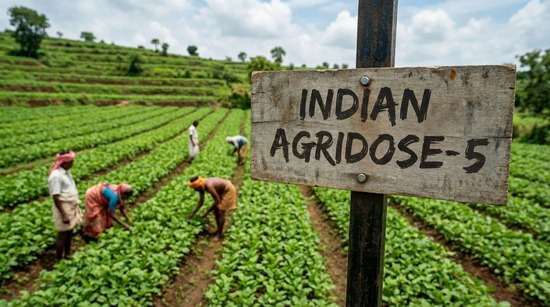
Indian agriculture is no longer just feeding the nation — it is building billion-rupee businesses, exporting to the world, and adopting AI faster than ever before.
From smart pest-control technologies in rice fields to AI assistants for dairy farmers, from agri startups chasing $1B revenues to record-breaking coffee exports, this edition captures a powerful truth:
India’s farm economy is quietly becoming one of the most technology-driven growth engines of the country.
In this issue, you’ll discover how agri giants, startups, cooperatives, and the government are working at the grassroots — yet thinking global.
Godrej Agrovet Launches TAKAI Insecticide for Rice Pest Control
Godrej Agrovet Limited has expanded its crop protection portfolio with the launch of TAKAI, a new rice-specific insecticide powered by Cyclapryn technology from ISK Japan. Introduced on February 7, 2026, TAKAI targets two major rice pests—Stem Borer and Leaf Folder—and is designed for India’s multi-season, high pest-pressure rice-growing conditions. The insecticide follows a two-stage application protocol to provide extended protection during critical growth phases, helping prevent yield losses that can reach 20–40 per cent under severe infestations. Godrej Agrovet is also seeking label expansion to additional crops such as maize, chilli, soybean, chickpea, and sugarcane, reflecting its strategy of leveraging global R&D partnerships to deliver advanced, India-specific crop protection solutions.
Slurrp Farm Raises ₹30 Crore at ₹810 Crore Valuation, Marks 59% Jump in Just 2 Years
Children-focused millet food brand Slurrp Farm has raised ₹30 crore ($3.3 million) in its extended Series C round from Scarlet Ventures, pushing its valuation to ₹810 crore ($90 million) — a 59% increase from its 2024 round. Backed by Anushka Sharma, the Gurugram-based startup has now raised nearly $18 million to date. The company, known for its millet-based snacks and meals for children, reported 30% YoY revenue growth to ₹95.6 crore in FY25, though losses rose to ₹32.7 crore. The fresh capital will be used to strengthen long-term operations as Slurrp Farm continues to expand in India’s fast-growing healthy kids food market.
StarAgri Posts 55% Revenue Growth in FY25, Targets ₹2,000 Cr in FY26
StarAgri reported consolidated revenue of ₹1,560.4 crore in FY25, marking a 55% year-on-year growth, while net profit rose 47% to ₹68.47 crore. The company has remained profitable since inception, with NPAs below 1%, reflecting strong balance sheet discipline. Its integrated ecosystem spans over 2,200 warehouses across 400 locations, 5.08 million metric tonnes of storage, and a digital marketplace that has facilitated over $1 billion in agri-trade. StarAgri’s NBFC arm has disbursed ₹9,000 crore, supported by warehouse-backed financing and data-driven credit models. To scale further, the company is launching Stocyard for non-agri warehousing and AgriFresh for fresh produce supply chains. With a FOCO expansion model and tech-led strategy, StarAgri is now targeting ₹2,000 crore in revenue in FY26 and aims to empower one crore farmers by FY30.
Amul Launches AI Assistant ‘Sarlaben’ to Support Dairy Farmers
Amul has launched a new AI-based digital assistant called ‘Sarlaben’ to support dairy farmers and livestock owners across Gujarat. The initiative was inaugurated by Bhupendra Patel and is designed to provide easy access to information on animal health, nutrition, and vaccination through mobile phones. The AI tool aims to simplify technology for small farmers and women livestock keepers, helping them make informed decisions without depending on immediate veterinary assistance. The move aligns with the central government’s push to strengthen the dairy ecosystem, including the provision to train 20,000 veterinary professionals. This initiative highlights how collaboration between government, cooperatives, and technology can accelerate growth and improve productivity in India’s dairy sector.
Namaste India Expands to Bihar with ₹350 Crore Dairy Investment
Namaste India, part of the RSPL Group, has entered the Bihar market with the launch of fresh milk, backed by a planned investment of ₹350 crore. The company aims to build a locally rooted, large-scale dairy ecosystem to deliver high-quality and creamy milk across the state. Its portfolio in Bihar includes FCM (Perfect Maza), Standard Milk (Shakti Plus), and Cow Milk in pack sizes of 500 ml, 1 litre, and 6 litre. The products will be distributed through a strong omnichannel network across 12 districts, including Patna, Gaya, Aurangabad, and Navada, covering retail outlets, kirana stores, modern trade, institutions, and direct distributors.
BigHaat Targets $1B Revenue with Global Expansion Plans
Bengaluru-based agtech platform BigHaat has unveiled plans to expand across India and enter African and Southeast Asian markets, aiming to achieve $1 billion in annual revenue within five years. Founded in 2015 by Sateesh Nukala and Sachin Nandwana, the company has grown from an online farm input marketplace into a full-stack agri value chain platform serving nearly three million monthly active farmers. Following a recent $10 million funding round led by Bidra, the VC arm of OCP Group, BigHaat says it is close to EBITDA breakeven and expects full profitability by 2026. The company plans to scale its input and market linkage businesses, monetize its large agricultural data platform, and expand sourcing of traceable spices, grains, and pulses, positioning itself as a capital-efficient, last-mile digital connectivity platform for rural markets.
HUL Acquires Remaining 49% Stake in OZiva for ₹824 Cr
Hindustan Unilever Limited (HUL) has completed the acquisition of the remaining 49% stake in plant-based nutrition brand OZiva for ₹824 crore, making it a wholly owned subsidiary. HUL had previously acquired a 51% stake in OZiva in December 2022 for ₹264.28 crore, valuing the company at around ₹518 crore at the time. The latest transaction strengthens HUL’s presence in the fast-growing health and wellness segment and fully integrates OZiva into its portfolio.
Centre Releases Over ₹1,133 Crore to Strengthen Panchayati Raj Institutions
The Government of India has released over ₹1,133 crore under the Fifteenth Finance Commission (XV FC) grants to strengthen Panchayati Raj Institutions (PRIs) and Rural Local Bodies across Madhya Pradesh, Punjab, and Telangana during FY 2025–26. Madhya Pradesh received ₹652.55 crore as the second installment of untied grants for FY 2024–25, benefiting district, block, and gram panchayats across the state, along with the release of previously withheld funds. Punjab was allocated ₹222 crore as the first installment of untied grants for FY 2025–26, supporting thousands of village, block, and district panchayats. Telangana received ₹256.03 crore as the first installment of untied grants for FY 2024–25, with additional withheld funds released to eligible gram and block panchayats. The funding aims to enhance local governance, rural infrastructure, and service delivery at the grassroots level.
₹1 Lakh Crore Agri Infrastructure Push; Focus on Pulses, MSP and Crop Diversification
Speaking in the Rajya Sabha, Agriculture Minister Shivraj Singh Chouhan highlighted that over ₹1 lakh crore worth of infrastructure is being developed under the Agriculture Infrastructure Fund (AIF), including cold storages, warehouses, custom hiring centres and processing units, helping reduce post-harvest losses by 5–15%. He said the government is ensuring MSP at 50% above cost of production and guaranteeing 100% procurement of tur, masur and urad through agencies such as NAFED and NCCF. The government is also advancing the Pulses Self-Reliance Mission, crop diversification, PM-KUSUM and crop residue management initiatives to raise farmer incomes and achieve pulses self-sufficiency by 2030-31. Chouhan emphasized that farmers should not be solely blamed for stubble-burning pollution and noted that subsidies and mechanization support are being expanded to promote sustainable residue management.
India’s Coffee Exports Poised to Cross $2 Billion in FY26
India’s coffee exports are on track to surpass the $2 billion mark in FY26, reflecting strong global demand despite ongoing geopolitical challenges. By early February 2026, exports of green coffee beans alone had already reached $1.72 billion, putting the sector well on course to achieve a record performance by the end of the fiscal year. The growth highlights the resilience and competitiveness of India’s coffee industry in international markets.
Natural Rubber Prices Rise 13% Amid Supply Constraints and Strong Demand
Natural rubber prices are witnessing an upward trend due to supply shortages caused by the stoppage of tapping and sustained demand from domestic and global industries. RSS IV prices have climbed to ₹210 per kg from ₹185 at the beginning of the year, marking a 13% increase. With industrial demand expected to maintain momentum and India’s economic growth projected to remain strong, the price surge is likely to continue. The improving market outlook is expected to encourage growers to resume tapping activities more actively and benefit from higher returns.
Bihar Offers 75% Subsidy on Pesticide Spraying for Litchi Orchards
The Bihar Agriculture Department is providing a 75% subsidy on pesticide spraying for litchi orchards under its Pest Management Scheme to help farmers reduce costs and improve crop quality. Under the scheme, farmers will pay only ₹40 per tree for the first spray (actual cost ₹162) and ₹28 per tree for the second spray (actual cost ₹114), covering up to 84 trees per orchard. The initiative aims to ensure timely pest control, enhance fruit quality, and increase yields. Farmers must apply online through the official horticulture portal, after which applications will be verified and forwarded to service providers for scheduled spraying. Eligible beneficiaries will receive support following district-level approval.
Editor’s Note
Indian agriculture is standing at a powerful crossroads where tradition is meeting technology, and local farms are connecting to global markets. This week’s stories clearly show that farming is no longer just about production—it is becoming a high-growth economic sector driven by innovation, capital, and digital transformation. From AI tools reaching dairy farmers to agri startups scaling across continents, from large investments in infrastructure to record export performances, the sector is rapidly evolving into a modern, competitive ecosystem.
What is most encouraging is that this transformation is not limited to boardrooms or cities—it is reaching fields, villages, warehouses, cooperatives, and farmer households. As technology becomes more farmer-first, capital continues to flow into rural India, and global demand opens new doors, agriculture is emerging as one of the strongest pillars of India’s future economy. At Indian AgriDose, we remain committed to bringing you stories that go beyond headlines and reflect the real momentum shaping Indian agriculture today.